Monday, August 8, 2011

'Tumi Ebar Aamay'- Bengali Song by Rabindranath Tagore


Dear Friends, today, Baishe Shraabon (22 Shravan) is the Death Anniversary of Rabindranth Tagore. We all are remembering him with great respect. I am posting one of my Most favourite song by Rabindhranath Tagore, 'Tumi ebar aamay laho hey Naath laho'- I also tried to translate the song, please forgive any mistakes, as my aim is only to spread the message of Tagore to all of you!


This song is a prayer where the writer is requesting the Lord to accept him in spite of all the flaws, to make him Pure and guide him in the right way. I really really love this song because of the Sincerity in its approach. The words, the music- all combine to create the effect of a prayer!


This is the link where you can download the song or you can just hear it, it is sung by the great artist- Mita Haq.


And here is the Lyrics:


Tumi ebar aamaay laho hey Naath laho,

Tumi ebar aamaay laho hey Naath laho,

(O Lord, accept me this time,)

Ebar tumi firo na hey,

(Please don’t go back without me this time)

Hriday kere niye raho.

Hriday kere niye raho.

(Accept my heart O Lord!)

Tumi ebar aamaay laho hey Naath laho.

Tumi ebar aamaay laho hey Naath laho.

(O Lord, accept me this time,)


Jedin gechhe toma bina,

(The days of my life spent without remembering you)

Taare ar phire chahina, jak she dhulaate,

(I do not look back at them any more, let them be reduced to the dust)

Jedin gechhe toma bina,

(The days of my life spent without remembering you)

Taare ar phire chahina, jak she dhulaate,

(I do not look back at them any more, let them be reduce to the dust)

Ekhon tomar aaloy jeebon meley,

(Now I will only look at your Light)

Jeno jaagi ahoraho,

Jeno jaahi ahoraaho.

(And want to be aleart/ awake always)

Tumi ebar aamaay laho hey Naath laho.

Tumi ebar aamaay laho hey Naath laho.

(O Lord, accept me this time,)


Ki aabeshe kisher kothae,

(Misguded by many desires)

Phirechhi je jothae tothae, pothe prantore,

(I have roamed around aimlessly for a long time)

Ki aabeshe kisher kothae,

(Misguded by many desires)

Phirechhi je jothae tothae, pothe prantore,

(I have roamed around aimlessly for a long time)

Ebar buker kaachhe o mukh rekhe,

(Now keep yourself inside my heart)

Tomar aapon baani kaho,

Tomar aapon baani kaho.

(And guide me with your Light)

Tumi ebar aamaay laho hey Naath laho.

Tumi ebar aamaay laho hey Naath laho.

(O Lord, accept me this time,)


Kato kolush koto phaanki,

(Many are the vices and deceptions)

Ekhono je achhe baaki moner gopone,

(Which still exist in my mind)

Kato kolush koto phaanki,

(Many are the vices and deceptions)

Ekhono je achhe baaki moner gopone,

(Which still exist in my mind)

Aaamay tar laagi ar phiraayo na,

(Oh Lord, please do not refuse me on that account)

Taare aagun diye daho,

Taare aagun diye daho.

( Burn all thoses vices with Thy light of Knowledge/ Love)

Tumi ebar aamaay laho hey Naath laho.

Tumi ebar aamaay laho hey Naath laho.

(O Lord, accept me this time,)


Some other songs by Tagore:

# 'Keno Jaagena Jaagena',


# 'Chiroshokha He'


Saturday, July 30, 2011

Ramanand Sagar's Ramayan (8)- Introduction of the Royal House of Mithila


Now we have the first scene in the Royal house of Mithila. We can see Raja Janak along with Rani Sunayna and Kulguru Shataanand performing a Shiv puja. Really a nice way to introduce a ‘Pious’ family. The same was done in the beginning while introducing the royal family of Ayodhya, with a prayer to Kuldevta Suryadev. Truly, Ramayana helps us to ‘connect wth the Divine Lord’ in each of its scenes. It portrays the ‘ideal way to lead our life’.


Here are the videos of this part:-

http://www.youtube.com/watch?v=KAoV8ooX1Z0&feature=related

http://www.youtube.com/watch?v=kP03uNzeeMQ


Coming back to Mithila- while performing the puja, we can see Sita Mata for the first time. Really really a beautiful entry. They talk about the oath of Raja Janak about ‘Shiv-Dhanu bhang’. We find that the task is really a difficult one. Rani Sunayana asks Sita to pray for a virtuous and noble husband, she gets worried about the futue of her daughter. But Shataanand suggests Janak to have Faith in the oath, implying that, the Power which inspired him to take the oath with see to its success. The background music of this scene is soooo Divine!! I always cry while listening to it, the same music has been used in many of the scenes after this and each time I get filled with emotions while listening to it! Very very powerful tune indeed!


Now a messenger informs Raja Janak about the arrival of Muni Vishwamitra, who is staying in the 'Arma vatika' of Mithila. Raja Janak, Sunayana Devi and Shataanand –all become very happy to recieve the news of the arrival of Vishwamitra. They feel his presence will make the ambience more pious!


We have another good news in this scene- the brother of Janak, Kushadhwaj with his family also come to attend the Swayambar. All the members of both the families become very happy to meet each other. Then Janak decides to go to welcome Sage Vishwamitra personally. We will discuss about that scene in my next post.

Jai Shri Ram!


Prev posts on Ramayan:-

Ramanand Sagar's Ramayan (7)- Ahalya Uddhar and Journry towards Mithila


Ramanand Sagar's Ramayan (6)- Tadka Vadh


Next Post on Ramayan:


Friday, July 22, 2011

'On Another's Sorrow'- A Poem By William Blake

William Blake

William Blake

On Another's Sorrow

From Songs of Innocence


Dear Friends, today I am sharing a wonderful poem by William Blake, where he tells us how the Lord is ALWAYS with us in happiness as well as in sorrow. When we feel sad, He is right there with us, He wants all of us to be happy. He never leaves us. We just need to be aware of the fact and only then we can 'perceive' His presence in every momeent of our life. I was really so overwhelmed by this poem when I read it for the first time.  The link was provided by Dear Sister Lola and I thought to share it with you all. Really a great poem portraying the way Lord FEELS for all of us. 

Can I see another's woe,

And not be in sorrow too?

Can I see another's grief,

And not seek for kind relief?

Can I see a falling tear,

And not feel my sorrow's share?

Can a father see his child

Weep, nor be with sorrow filled?

Can a mother sit and hear

An infant groan, an infant fear?

No, no! never can it be!

Never, never can it be!

And can He who smiles on all

Hear the wren with sorrows small,

Hear the small bird's grief and care,

Hear the woes that infants bear -

And not sit beside the nest,

Pouring pity in their breast,

And not sit the cradle near,

Weeping tear on infant's tear?

And not sit both night and day,

Wiping all our tears away?

O no! never can it be!

Never, never can it be!

He doth give His joy to all:

He becomes an infant small,

He becomes a man of woe,

He doth feel the sorrow too.

Think not thou canst sigh a sigh,

And thy Maker is not by:

Think not thou canst weep a tear,

And thy Maker is not near.

O He gives to us His joy,

That our grief He may destroy:

Till our grief is fled and gone

He doth sit by us and moan.


.

Wednesday, July 13, 2011

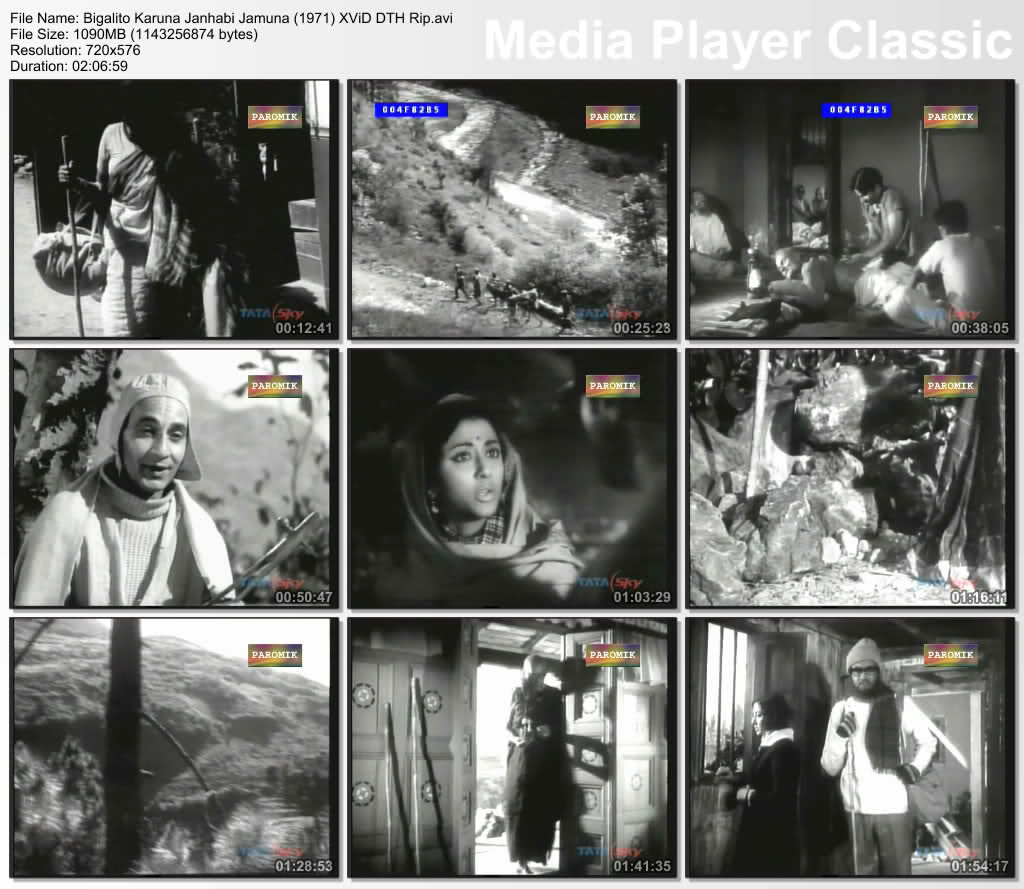
Bigolito Koruna Janhobi Jomuna- Bengali Film


This is Bengali film which is based on a journey towards Kedarnaath and Badrinath. It has a group of pilgrims who are going to visit the shrines to fulfil their wishes. The main Protagonist, (played by Shubhendu Chatterjee) is going there only to observe the journey, the different aims and the tries to understand the purpose of this journey.


The film is very very rich in music. Pankaj Kumar Mullick has done such a marvellous job here that you'll only have to listen to it one. After that the tunes/ shlokas will keep on repeating themselves in your mind. The 'Charaaibeti' is one of the most used shloka here. There are other chants also. The theme music throughout the whole film is sooo Blissful and Divine!


The narrator meets the family where the elder sister is going for the welfare of her husband and the younger sister is going to correct her mistake- once she showed her disrespect towards God and lost the power of her legs. The hero follows her and they start sharing their views, accepteach other as companions and start the journey for the final phase.

There they face a snow storm and gets buried under the snow. The last sc of the film just freezes the shot. I liked that effect. It tells us that the end is actually endless...


Faith is one of the chief theme of this story. The hero wants to have Faith in this rituals/ journey towards the shrine, but he does not have enough. The heroine never had faith in God, but after losing her strength, she realises her mistake and decides to undertake the pilgrimage. In the course of the journey, she gets her strength back (really a nice sc) and the hero watches her, empathizes with her journey. In the last sc, we find that the hero realises the element of faith from the heroine only. He finds it in the eyes of her and that moment gets freezed, it becomes eternal!!


Really a nice movie. The shooting has been done in the original locations, so you'll get the flavour of the original journey in the mountains, the tough climbing, the typical setting of a 'choti' to take rest, the different characters, whom we meet during the journey, each of them has a story, the naarator obsereves them and gather the experiences, learns from them and moves ahead. Very very beautiful to realise Spirituality thr' the nature, thr' the journey, (which can be termed as a 'spiritual journey' undertaken by each individual), thr' the music, thr' the river, thr' the characters... Really a nice experience!!


I only got one link in ref with this film, may be you'll get some Pictures of the movie from here:


Some related posts:

Ramanand Sagar's Ramayan (7)- Ahalya Uddhar and Journry towards Mithila


Now we are starting our journey towards Mithila, the sc starts from here:

http://www.youtube.com/watch?v=AnUX68Y9zEQ&feature=related

And continues till:

http://www.youtube.com/watch?v=_gs3AO069eE&feature=related

http://www.youtube.com/watch?v=KAoV8ooX1Z0&feature=related

During their stay in Vishawmitra’s aashram, Shri Ram and Lashman come to know about the envoy from the King of Mithila- Raja Janak. Vishwamitra asks them to accompany him to Mithila and as obedient students, they they follow him.

Here we also have the story of the birth of Sita. That once when there were draught in Mithila, then King Janaka himself started ploughing and found a baby girl in the plough filed, and named her Sita.

Now we have the song- ‘Chale Ram Lakhan muni sanga’, where they visit the Ganges and Vishwamitra tells them about the history of Sagar Raja and Bhagirath. I love the line- ‘Jagpaavani Ganga’ from the song. The music here is so pious!! It just expresses all about the Mahima of Maa Ganga!

Continuing their journey they come to the deserted place which was the ashram of Rishi Gautam once. Now the famous Ahalya uddhar takes place! It is So Powerful that words are not enough to express the impact! The Lord uplifted the lady who was rejected by her husband. It is such a great feeling that you have to go thr’ the emotions to ‘Realise’ it. The lines from RCM (in the original version of the song) as well as the changed words in the new version- both are sooo True!! I cannot quote a single line from that composition, it is beautiful as a whole! But yes, I love the line ‘Pad raj ki mahima bhaari’ and ‘Jo tribhuvan pujita, Lakshmi sevita, un charno me sthaan diya’:- all these expressions are so Beautiful!!

And just before the sc, when Vishwamitra says that only a Lord can uplift the wretched one! I just Love those words!! It proves the ‘Karuna’ of the Lord regarding All the creatures!! Another overwhelming sequence!

After Ahalya uddhar they reach Mithila, from where we’ll start in my next post.


Jai Shri Ram!


Links of Prev posts On Ramayan:

Ramanand Sagar's Ramayan (6)- Tadka Vadh


Ramanand Sagar's Ramayan(5)- Nice Family Moments and The Arrival of Rishi Vishwamitra


Next post:-

Ramanand Sagar's Ramayan (8)- Introduction of the Royal House of Mithila